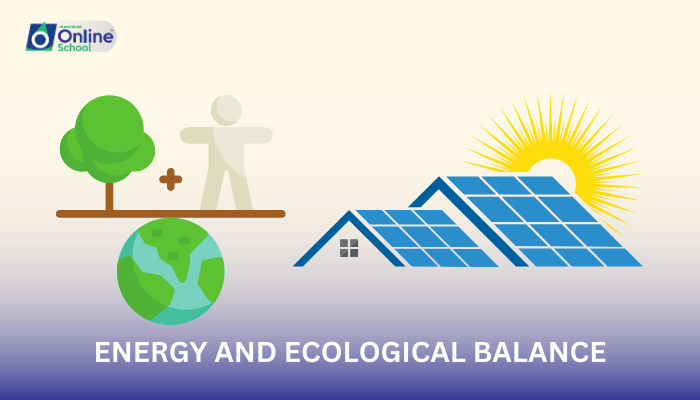
Lesson 10: Energy and Ecological Balance

Lesson 103/137 | Study Time: 30 Min
Course: Biology X
Lesson 10: Energy and Ecological Balance

Learning Outcomes


i. Connect biogeochemical cycles to the flow of energy within ecosystems.


ii. Understand the significance of ecological balance and the role of energy in sustaining it.


iii. Appreciate the interconnectedness of energy flow and nutrient cycles in maintaining the health of natural systems.


i. Energy Flow and Biogeochemical Cycles


Energy flow and biogeochemical cycles are intertwined processes essential for the functioning of ecosystems. While energy from the sun drives the flow of energy through food chains and webs, biogeochemical cycles ensure the recycling of essential nutrients that sustain life processes.


Photosynthesis and the Carbon Cycle: Energy from the sun is transformed into chemical energy by plants through photosynthesis, linking the energy flow to the carbon cycle as plants absorb carbon dioxide from the atmosphere.


Decomposition and Nutrient Release: Decomposers release nutrients back into the soil, which plants use to grow and produce biomass, tying the energy that consumers obtain from plants to the nutrient cycles.


ii. Importance of Ecological Balance


Ecological balance refers to the equilibrium between, and harmonious coexistence of, organisms and their environment. Maintaining this balance is crucial for the health and sustainability of ecosystems.


Energy Efficiency: The efficiency of energy transfer between trophic levels affects population sizes and the stability of food webs.


Nutrient Availability: The availability of nutrients influences primary productivity and the ability of ecosystems to support various forms of life.


iii. Role of Energy in Ecological Balance


Energy plays a pivotal role in maintaining ecological balance through:


Regulating Climate: The carbon cycle influences the Earth's climate, which in turn affects energy flow through ecosystems.


Supporting Life: Energy drives biological processes, from the cellular level in organisms to the biome level across the planet.


iv. Interconnectedness of Energy Flow and Nutrient Cycles


Energy flow and nutrient cycles are deeply connected:


Trophic Dynamics: Energy flow affects the rates of nutrient cycling; for example, higher rates of predation can increase the rate of nutrient return to the soil through decomposition.


Ecosystem Responses: Changes in energy flow can lead to shifts in biogeochemical cycles, affecting ecosystem health, such as changes in primary productivity altering the carbon and nitrogen cycles.


In conclusion, the flow of energy and the recycling of nutrients are fundamental to maintaining ecological balance. The constant input of solar energy and the cycling of elements like carbon and nitrogen ensure that ecosystems can sustain life. Understanding the relationship between these processes is critical for environmental conservation and managing the impact of human activities on natural systems.


Fatima Khan

Fatima Khan

Product Designer
Profile

Class Sessions

1- Lesson 01: The Essentials of Respiratory Physiology 2- Lesson 02: Plant Respiration and Photosynthesis 3- Lesson 03: Human Respiratory Anatomy 4- Lesson 04: Mechanics of Breathing 5- Lesson 05: Breathing Rates and Their Significance 6- Lesson 06: Analysis of Air Composition 7- Lesson 07: Respiratory System Diseases 8- Lesson 08: Smoking and Respiratory Health 9- Lesson 01: Introduction to Homeostasis 10- Lesson 02: Plant Waste Management 11- Lesson 03: Osmotic Balance in Plants 12- Lesson 04: Major Homeostatic Organs in Humans 13- Lesson 05: Skin and Thermoregulation 14- Lesson 06: Lung Function in Gas Regulation 15- Lesson 07: Kidneys and Blood Composition 16- Lesson 08: The Urinary System 17- Lesson 09: Kidney Structure and Function 18- Lesson 10: Nephron: The Excretory Unit 19- Lesson 11: Urine Formation 20- Lesson 12: Kidneys and Osmoregulation 21- Lesson 13: Kidney Stones and Their Management 22- Lesson 14: Kidney Failure and Dialysis 23- Lesson 15: Historical Contributions to Urology 24- Lesson 01: Principles of Coordination 25- Lesson 02: Types of Coordination 26- Lesson 03: Modes of Coordination 27- Lesson 04: Organs of Coordination and Control 28- Lesson 05: Receptors and the CNS 29- Lesson 06: Brain Anatomy and Functions 30- Lesson 07: Brain vs. Spinal Cord 31- Lesson 08: Neuron Structure 32- Lesson 09: Reflexes and Neurons 33- Lesson 10: Pathway of Nervous Impulses 34- Lesson 11: Sensory Receptors in Homeostasis 35- Lesson 12: Visual Reflexes and Corrections 36- Lesson 13: Vitamin A and Vision 37- Lesson 14: Sensory Roles in Balance and Accommodation 38- Lesson 15: Historical Perspectives on Vision 39- Lesson 16: Endocrine System and Hormones 40- Lesson 17: Hormonal Regulation and Feedback 41- Lesson 18: Adrenaline and Hormonal Responses 42- Lesson 19: Nervous Disorders 43- Lesson 01: Understanding the Skeletal System 44- Lesson 02: Function of the Skeleton 45- Lesson 03: Composition of the Skeleton 46- Lesson 04: Historical Anatomy Contributions 47- Lesson 05: Joint Mobility 48- Lesson 06: Ligaments and Tendons 49- Lesson 07: Hinge Joint Mechanics 50- Lesson 08: Ball-and-Socket Joints 51- Lesson 09: Muscular Antagonism 52- Lesson 10: Calcium and Bone Health 53- Lesson 11: Arthritis: Causes and Management 54- Lesson 01: Fundamentals of Reproduction 55- Lesson 02: Asexual Reproduction in Organisms 56- Lesson 03: Vegetative Propagation Techniques 57- Lesson 04: Artificial Vegetative Propagation 58- Lesson 05: Parthenogenesis in Reproduction 59- Lesson 06: Cloning: Concepts and Processes 60- Lesson 07: Sexual Reproduction in Plants 61- Lesson 08: Adaptations in Flower Pollination 62- Lesson 09: Seed Structure and Function 63- Lesson 10: Seed Germination Types 64- Lesson 11: Conditions for Seed Germination 65- Lesson 12: Historical Insights into Plant Sexuality 66- Lesson 13: Asexual Reproduction in Animals 67- Lesson 14: Fertilization Mechanisms 68- Lesson 15: Rabbit Reproductive Anatomy 69- Lesson 16: Gametogenesis in Rabbits 70- Lesson 17: The Importance of Population Planning 71- Lesson 18: Understanding AIDS 72- Lesson 19: Role of AIDS Control Programs 73- Lesson 01: Introduction to Genetics 74- Lesson 02: Gene Function and Inheritance 75- Lesson 03: Chromatin Structure 76- Lesson 04: Genes vs. Alleles 77- Lesson 05: The Central Dogma of Molecular Biology 78- Lesson 06: Patterns of Inheritance 79- Lesson 07: Mendelian Genetics 80- Lesson 08: Co-dominance and Blood Types 81- Lesson 09: Incomplete Dominance 82- Lesson 10: Sources of Genetic Variation 83- Lesson 01: Basics of Biotechnology 84- Lesson 01: Ecological Organization 85- Lesson 02: Understanding Ecosystems 86- Lesson 03: Ecosystem Interrelationships 87- Lesson 04: The Sun as an Energy Source 88- Lesson 05: Material and Energy Flow 89- Lesson 06: Food Chains and Webs 90- Lesson 07: Trophic Level Energy Relations 91- Lesson 08: Ecological Pyramids 92- Lesson 09: Biogeochemical Cycles 93- Lesson 10: Energy and Ecological Balance 94- Lesson 11: Ecological Interactions 95- Lesson 12: Population Dynamics 96- Lesson 13: The Importance of Ecological Balance 97- Lesson 14: Human Impact on the Environment 98- Lesson 15: Environmental Challenges 99- Lesson 16: Pollution and Its Sources 100- Lesson 17: Effects of Pollution 101- Lesson 18: Pollution Control Measures 102- Lesson 19: Nature Conservation 103- Lesson 20: Conservation Strategies 104- Lesson 02: Biotechnology, Genetic Engineering, and Fermentation 105- Lesson 03: The Science of Fermentation 106- Lesson 04: Fermentation by Yeast and Bacteria 107- Lesson 05: Fermentation Products in Daily Life 108- Lesson 06: Industrial Use of Fermenters 109- Lesson 07: Operating Fermenters 110- Lesson 08: Benefits of Fermenters in Medicine 111- Lesson 09: Genetic Engineering Defined 112- Lesson 10: Gene Transplantation Techniques 113- Lesson 11: Genetic Engineering in Agriculture 114- Lesson 12: Genetic Engineering in Animal Health 115- Lesson 13: Genetic Engineering in Medicine 116- Lesson 14: Single-Cell Protein (SCP) 117- Lesson 15: SCP in Animal Feed 118- Lesson 16: SCP in Human Nutrition 119- Lesson 01: Introduction to Pharmacology 120- Lesson 02: What Are Drugs 121- Lesson 03: Sources of Drugs 122- Lesson 04: Common Drug Classes and Uses 123- Lesson 05: Historical Figures in Pharmacology 124- Lesson 11: Meiosis and Variation 125- Lesson 06: Addictive Drugs and Their Effects 126- Lesson 12: Types of Variation 127- Lesson 07: Understanding Hallucinogens 128- Lesson 13: Evolution and Variation 129- Lesson 08: Narcotics Explained 130- Lesson 14: Natural Selection and Evolution 131- Lesson 09: Consequences of Drug Addiction 132- Lesson 15: Artificial Selection 133- Lesson 12: Antibiotic Classes and Uses 134- Lesson 11: Plants as Drug Sources in Pakistan 135- Lesson 10: Recognizing Addiction Symptoms 136- Lesson 13: Antibiotic Resistance 137- Lesson 14: Vaccines and Immunity